

Breadcrumbs
These links will help you get back to where you want to go faster.
How to Keep Your Arizona Car Cool and Comfortable: Expert Strategies for Ventilation, AC Maintenance, and Auto Glass Solutions
Arizona’s scorching heat presents unique challenges for drivers, making it essential to understand how to effectively cool your vehicle and protect it from thermal damage. With interior temperatures in Mesa vehicles reaching 50 to 65°C (122 to 149°F) in as little as one hour, and components like steering wheels and dashboards soaring beyond 70°C (158°F), taking proactive measures is vital for comfort, safety, and vehicle longevity. This comprehensive guide explores the science behind heat buildup in cars, smart cooling techniques backed by research, and the critical role of professional auto glass services from SDR Auto Glass in Mesa, Arizona.
What will you learn in this article:
– Arizona’s extreme heat causes vehicle interiors to reach dangerously high temperatures quickly, posing comfort and safety risks. The “thermal greenhouse effect” traps solar energy inside cars, heating surfaces and raising cabin temperatures rapidly.
– Interior temperatures can exceed 138–150°F within an hour, with dashboards reaching over 180°F; materials like leather retain heat longer. Damaged or poorly sealed auto glass reduces its effectiveness in blocking heat, making your AC work harder and potentially damaging vehicle components.
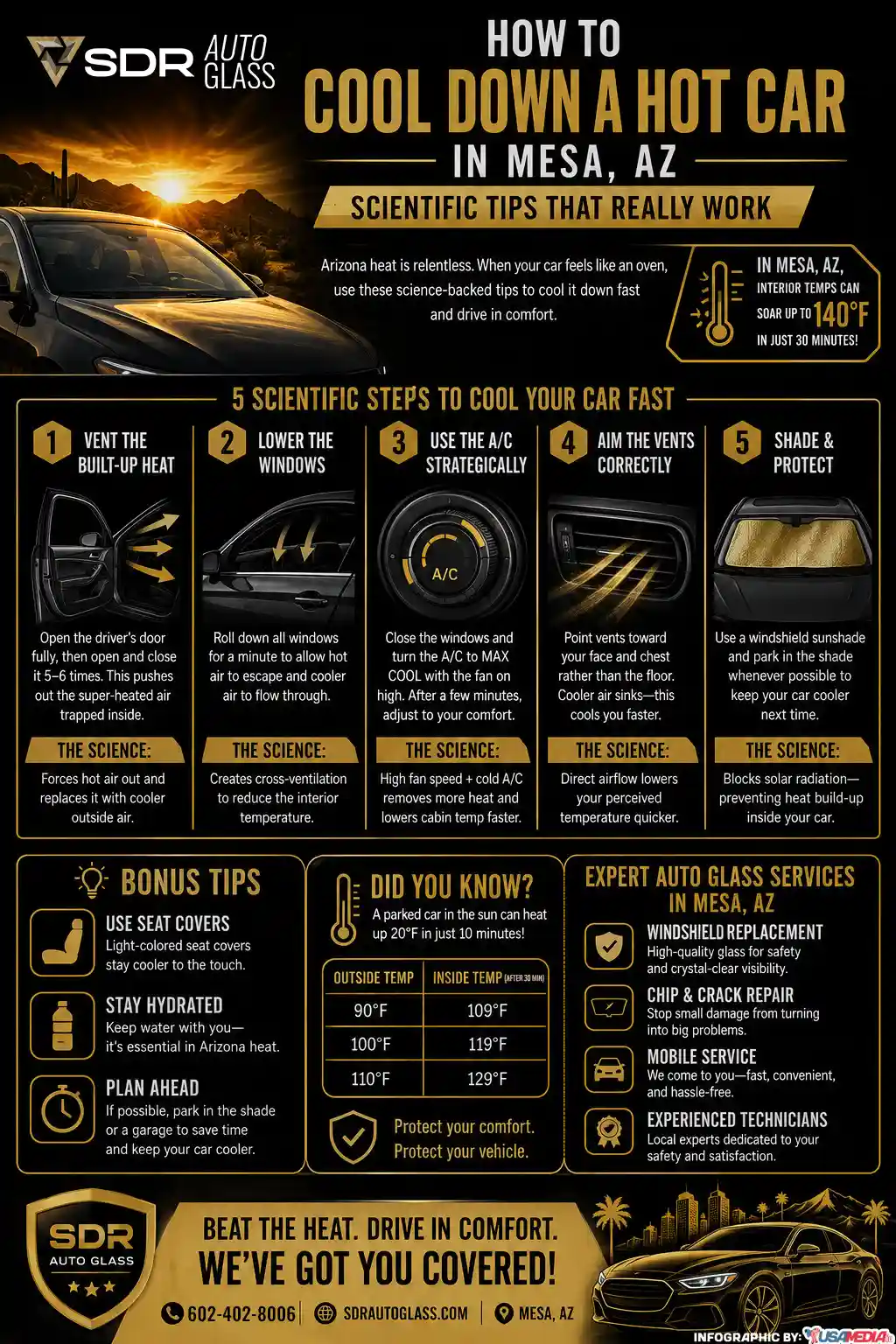
– Ventilate your vehicle by opening all windows or doors briefly before using AC to expel trapped hot air and lower interior temperatures efficiently. Use a window-door “pumping” technique (opening a window and repeatedly opening/closing the opposite door) to rapidly flush out hot air.
– Start the AC in fresh air mode, then switch to recirculation once cool. Set temperature low and adjust fan speeds for fuel efficiency. Turn off recirculation if rear passengers are present. Disable auto start/stop in extreme heat to keep AC performance consistent during stops.
– Replace cabin air filters every 12–15 months to keep airflow and AC efficient. AC use lowers fuel economy by 1–4 mpg in gas cars but improves safety by reducing driver fatigue; EVs experience minimal range loss from AC use.
– Park in shade or garages and use reflective sunshades to cut cabin heat by up to 30°F. Protect interiors with light seat covers, rotate the steering wheel away from direct sun, and leave windows slightly cracked for airflow.
– Regularly maintain your AC and inspect the windshield for cracks to prevent heat entry and keep cooling efficient. Auto glass blocks 40% of solar heat; damaged glass increases heat and can impair vehicle safety systems like ADAS.
– Advanced glass technologies (laminated glass, heat-absorbing tints, hydrophobic coatings) enhance heat control and safety. Cooling accessories like sunshades, UV/thermal window shades, headrest fans, breathable seat covers, and misting sprays improve comfort.
The Science Behind the Sweltering Heat Inside Your Car
The Thermal Greenhouse Effect Explained
Your vehicle functions much like a mobile greenhouse, trapping solar energy that quickly heats the interior. Visible sunlight passes easily through your car’s glass, warming up dark surfaces like the dashboard, leather seats, and trim. These surfaces emit energy as infrared heat, which struggles to escape through standard auto glass, resulting in rapidly rising cabin temperatures.
Temperature Dynamics on Hot Arizona Days
Scientific studies reveal how quickly cars heat up and why that matters for drivers. Research highlighted in Pediatrics shows that 80% of heat accumulation inside vehicles occurs within the first 20 minutes of exposure to sunlight. On a typical 100°F day in Mesa, vehicle interiors can reach upwards of 138°F to 150°F within an hour, while dashboards may exceed a blistering 180°F. Heat retention by leather and dense polymers prolongs discomfort since these materials continue radiating warmth even after the AC is running.
The Impact on Vehicle Components and Passenger Safety
Extreme heat strains not just your comfort but your vehicle’s structural integrity and safety systems. Auto glass, which blocks about 40% of solar heat, becomes less effective if cracked or poorly sealed, allowing additional heat infiltration that forces your AC to work harder. High temperatures can also damage adhesives, warp dashboard materials, and impair sensitive systems like Advanced Driver Assistance Systems (ADAS).
Maximizing Cooling Efficiency: Science-Backed Strategies That Work
Ventilate Before You Cool: The Essential First Step
Before running your AC, open all windows or doors for 30 to 60 seconds to expel trapped hot air. Hot air naturally rises and escapes, replaced by outside air that—even if warm—is significantly less hot than the sealed cabin air. This method, supported by Consumer Reports research, can lower interior temperatures by several degrees without using any fuel. Maintaining slightly open windows during the first few minutes of driving at low speeds further accelerates this cooling as moving air flushes heat from seats and headliners faster than air conditioning alone.
The Effective Window-Door “Pumping” Technique
A clever hack involves opening a window on one side of your car and repeatedly opening and closing the opposite door 5 to 6 times. This creates a pressure difference that pushes superheated air out of the cabin rapidly, dropping temperatures by up to 10–15°F within seconds, making it ideal on calm Arizona days before starting your engine.
Using AC’s Fresh Air Mode Before Recirculation
Contrary to common practice, start your AC in fresh air mode instead of recirculation when entering a hot car. Recirculation traps scorching inside air that your compressor must continuously cool, increasing fuel consumption and system strain. Using fresh air mode initially pulls in ambient air, reducing internal temperature to match outside conditions more efficiently. After a few minutes, switch to recirculation to maintain cool temperatures more economically.
Setting the AC Temperature to Its Lowest Setting
Setting your AC temperature to the lowest possible degree optimizes fuel efficiency and overall cooling performance. Air conditioning systems cool air down to about 38°F; setting a higher temperature forces the system to reheat cooled air, consuming extra power. Adjust fan speeds instead to personalize comfort while minimizing compressor load and fuel use.
Optimizing Rear Passenger Comfort
Turn off recirculation mode when passengers occupy the back seats to ensure even airflow. When recirculation is on, cooled air is cycled primarily in the front cabin, leaving rear passengers with stale, warmer air. Fresh air mode helps maintain comfort for everyone on board.
Disabling Auto Start/Stop Systems in Extreme Heat
While fuel-saving auto start/stop features are beneficial under normal conditions, they hinder cooling effectiveness in hot weather. When your engine shuts off at stops, the AC compressor stops running, causing rapid drops in cooling performance during stop-and-go traffic. Temporarily disabling this feature during Arizona’s intense summers maintains consistent cabin comfort.
The Importance of a Clean Cabin Air Filter
Regular replacement of your cabin air filter enhances airflow and AC efficiency, reducing system strain. Dirty filters block ventilation and force your AC to work harder. Easily accessible in most cars behind the glove compartment, replacing filters every 12–15 months is a simple DIY task that significantly improves cooling performance.
Balancing AC Use and Fuel Economy
Operating your vehicle’s air conditioning typically reduces fuel efficiency by 1 to 4 miles per gallon, yet it’s a necessary trade-off in Arizona’s heat. Maintaining a cool interior reduces driver fatigue, improves alertness, and speeds reaction times, enhancing overall safety. For electric vehicles, research from Consumer Reports shows that AC use has negligible impact on driving range, relieving concerns for EV owners in hot climates.
Preventing Overheating Before It Starts: Proactive Maintenance and Parking Tips
Smart Parking Choices
Shade is your best friend in Arizona’s heat—always park under trees, carports, or in garages if possible. Using reflective sunshades, such as WeatherTech or Sunflex products, further blocks radiant heat before it penetrates your windshield, lowering cabin surface temperatures by up to 30°F.
Protecting Your Interior Surfaces
Leather seats can absorb intense heat and suffer cracking over time; using light-colored seat covers or towels offers effective insulation. Brands like Carhartt and Ruff Tuff provide durable options designed to resist heat damage. Additionally, rotating your steering wheel to keep its surface out of direct sunlight and leaving windows cracked just ¼ to ½ inch (if safe) enhances internal air circulation to reduce heat buildup.
Routine AC and Vehicle Maintenance
Regularly scheduled service to check refrigerant levels, belts, and system components ensures your AC operates at peak performance during extreme heat. Likewise, inspecting your windshield for cracks or chips prevents heat infiltration and preserves the windshield’s crucial role in thermal insulation and structural support. Wiping down hot surfaces with a damp cloth before driving can instantly reduce burn risk on steering wheels and handles.
The Crucial Role of Quality Auto Glass in Heat Management
How Auto Glass Protects Against Solar Heat
Your windshield and windows block approximately 40% of solar radiation, making them vital to controlling interior temperature. Damaged or poorly sealed glass compromises this defense, allowing tremendous heat leakage that burdens your cooling system. Moreover, high-quality laminated glass and heat-absorbing tints can dramatically reduce heat transmission, enhance safety, and protect sensitive ADAS sensors.
Professional Windshield and Glass Replacement with SDR Auto Glass
Choosing expert replacement and repair services preserves your vehicle’s insulation and structural integrity. SDR Auto Glass in Mesa provides OEM-quality glass installations with precision urethane sealants that optimize heat rejection. Their certified technicians also offer comprehensive ADAS recalibration to maintain advanced safety features after replacing windshields or side glass.
Specialized Services for Side and Rear Windows
Beyond the windshield, side door glass repair and rear windshield replacement are equally important for maintaining cabin comfort and security. Cracks or broken windows lead to heat infiltration and can compromise structural strength. SDR Auto Glass swiftly restores these components, ensuring proper sealing against Arizona’s harsh sun and preserving defroster and antenna functions integrated into rear glass.
Advanced Glass Technologies That Make a Difference
Modern auto glass features include laminated safety glass to prevent shattering, heat-absorbing tints to minimize solar heat, hydrophobic coatings for better rain visibility, and embedded sensors for connectivity and safety. Investing in professional glass replacement guarantees these technologies perform optimally, especially in extreme desert environments.
Smart Products and Tools to Enhance Your Cooling Experience
Alongside proper maintenance and service, using specialized cooling accessories cuts waiting time and boosts comfort. Consider the following proven solutions:
- High-Reflectivity Windshield Sunshades: Dual-layer metallic or fabric sunshades like WeatherTech’s Custom SunShade can keep your dashboard and cabin surfaces up to 30°F cooler.
- UV/Thermal Side Window Shades: Transparent mesh shades, ideal for protecting children and pets, reduce heat absorption without blocking visibility.
- Headrest-Mounted Battery Fans: Portable rechargeable fans improve airflow instantly for rear passengers, flushing hot air out through slightly cracked windows.
- Thermal Breathable Seat Covers: Mesh seat covers promote air circulation, preventing direct heat transfer from hot leather seats.
- Misting Spray Bottles: Lightly misting seatbelts or leather surfaces uses evaporative cooling to lower temperatures without wetting interiors.
Actionable Cooling Routine for Immediate Relief
Implement this efficient sequence to dramatically reduce cabin heat in under a minute:
- Flush hot air: Roll down all windows, switch your AC to fresh air mode, and start driving to push hot air out.
- Cool down the interior: After roughly 30–40 seconds, close all front windows, leave rear windows slightly ajar, and switch to recirculation mode to efficiently cool the cabin air.
Why Choose SDR Auto Glass for Your Auto Glass Needs in Mesa, Arizona
SDR Auto Glass stands out as Mesa’s trusted expert in high-quality auto glass services tailored to withstand Arizona’s extreme heat. Their certified technicians deliver professional OEM glass installation with reliable urethane seals, restoring your vehicle’s heat rejection and structural integrity. They also provide full ADAS recalibration for vehicles with advanced safety tech, mobile glass replacement services for convenience, and insurance claim assistance to reduce out-of-pocket expenses.
Service Highlights
- OEM-quality windshield, side door, and rear glass replacement
- ADAS camera calibration for advanced driver assistance systems
- Mobile service options across Mesa and the East Valley
- Warranty coverage and insurance claim support
Stay Cool and Protected on Arizona Roads
Combining smart ventilation practices, routine AC maintenance, strategic parking, and professional auto glass care creates a comprehensive defense against Arizona’s relentless heat. Effectively managing your vehicle’s thermal environment not only ensures a comfortable and safe driving experience but also prolongs the life of your car’s interior and critical components. Choose expert services like SDR Auto Glass to maintain optimal auto glass performance and protect your investment in Mesa’s demanding climate.
Remember, your vehicle’s glass does more than provide visibility—it’s a fundamental part of thermal control and structural safety. Protect it wisely to keep your journey cool, comfortable, and secure all year round.